Idaho Ballot Measure Would Give Legislature Sole Power Over Drug Laws
Constitutional amendment on November ballot would strip voters of initiative power on controlled substances.
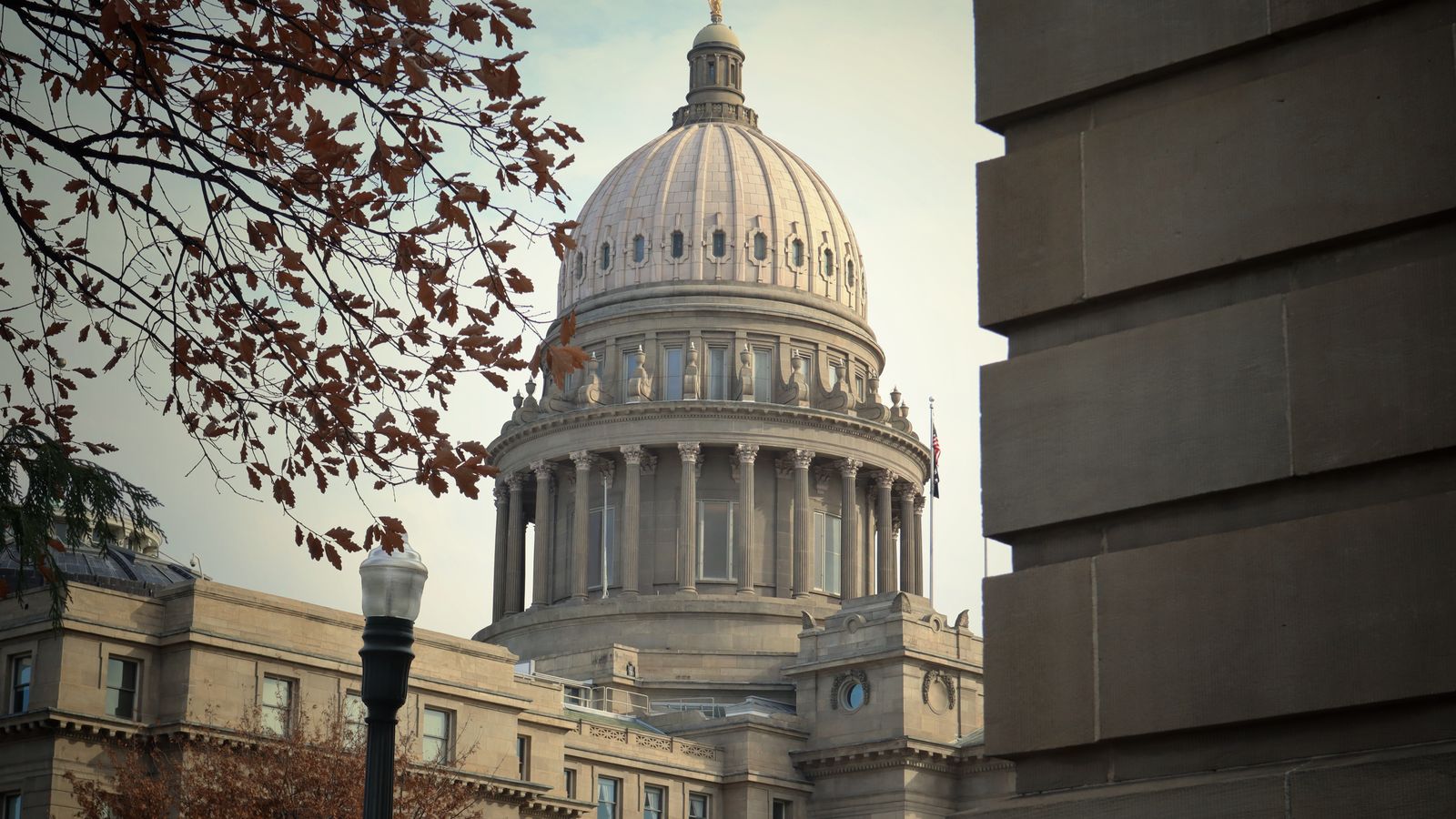
A view of the Idaho State Capitol Building framed by autumn leaves.
Constitutional Amendment Targets Citizen Initiative Process
The proposed constitutional amendment would permanently remove drug policy from Idaho's citizen initiative process, requiring all controlled substance laws to originate in the state legislature. The measure appears on the November 2026 ballot after clearing both chambers of the Idaho Legislature earlier this year. Simple majority wins.
Idaho is one of only two states—alongside Nebraska—where cannabis remains fully prohibited with no medical exception. The state has never allowed a cannabis legalization measure to reach the ballot, and lawmakers have repeatedly raised procedural barriers to citizen initiatives. This amendment represents the most aggressive step yet to foreclose that path entirely.
The timing isn't coincidental. Hemp-derived THCA flower and delta-8 products have proliferated in Idaho smoke shops and convenience stores since 2022, exploiting the federal farm bill's definition of hemp as cannabis containing no more than 0.3% delta-9 THC by dry weight. Idaho law enforcement has struggled to distinguish compliant hemp from illegal marijuana without expensive lab testing that measures total THC after decarboxylation. Prosecutors in Ada County and Bonneville County have quietly dismissed dozens of possession cases over the past 18 months when defendants produced Certificates of Analysis showing delta-9 levels below the federal threshold.
Legislative Proponents Frame Measure as Public Safety Safeguard
Supporters argue the amendment protects Idaho from voter-approved drug legalization experiments that have destabilized neighboring states. State Senator Brian Lenney, who co-sponsored the resolution, said the measure ensures drug policy decisions remain with elected officials who can respond to emerging public health data. He cited Oregon's Measure 110—which decriminalized personal possession of hard drugs in 2020—as a cautionary example of voter-led policy that required legislative correction.
The Idaho Sheriffs' Association and the Idaho Prosecuting Attorneys Council have endorsed the amendment. Their joint statement emphasized the difficulty of regulating novel psychoactive substances when policy decisions are made at the ballot box rather than through the legislative process. Neither organization mentioned cannabis specifically. Instead, they focused on fentanyl analogs and synthetic opioids.
That framing obscures the measure's practical effect. While the amendment's text applies to all controlled substances listed in Idaho Code Title 37, cannabis is the only drug with a politically viable legalization constituency in Idaho. No organized effort exists to legalize methamphetamine or heroin through the initiative process. The amendment is a preemptive strike against cannabis ballot measures, not a response to actual drug-decriminalization campaigns.
Hemp Industry and Civil Liberties Groups Oppose Restriction
Opponents say the amendment is an unconstitutional restriction on direct democracy and won't resolve Idaho's hemp enforcement crisis. The Idaho Hemp Growers Association filed a legal challenge in Ada County District Court in August 2026, arguing the measure violates the single-subject rule for constitutional amendments by conflating hemp, marijuana, psychedelics, and prescription drugs under one policy umbrella. That case is pending.
Civil liberties advocates point out that the amendment would also block future medical cannabis initiatives, even for narrow conditions like pediatric epilepsy or terminal cancer. Idaho patients currently travel to neighboring Montana, Oregon, or Nevada to access medical cannabis programs. According to a 2025 Boise State University poll, 61% of Idaho voters support medical cannabis legalization, but the legislature has refused to advance any legalization bill since 2018.
How the measure affects hemp-derived intoxicants remains uncertain. The amendment doesn't redefine hemp or change Idaho's current adoption of the federal 0.3% delta-9 THC standard. THCA flower and delta-8 vapes would remain legal under existing Idaho law unless the legislature separately bans them—a step lawmakers have discussed but not yet taken. The Idaho State Police issued a memo in July 2026 stating that hemp products sold in Idaho must comply with both federal hemp definitions and Idaho's controlled substance schedules, but the memo didn't clarify how officers should handle THCA flower that converts to delta-9 THC only when smoked.
For full background on Idaho's unique position as the nation's strictest cannabis prohibition state, see the CannIntel topic hub on Idaho cannabis prohibition.
If the amendment passes, Idaho will join a small group of states that have constitutionally restricted the initiative process on specific policy areas. Florida, for example, requires 60% supermajorities for constitutional amendments, and several states bar initiatives on tax and budget matters. But no state has categorically removed an entire class of criminal law from the initiative process in the way Idaho proposes.
The next signal will come on election night. If the measure fails, expect renewed efforts to place a medical cannabis initiative on the 2028 ballot. If it passes, Idaho's path to legalization will run exclusively through a legislature that's shown no appetite for reform.
For complete background, history, and our ongoing coverage of this story:
Open the CannIntel topic hub →Sources
The cannabis newsletter you forward to your team.
Federal policy, market data, grower alerts, and the one story that matters today. Sent every weekday at 7am. Free.
No spam. Unsubscribe with one click. 21+ only.
Related from Laws
Massachusetts Governor Urges 'No' Vote on Marijuana Sales Ban
Gov. Maura Healey came out against a ballot measure that would end legal marijuana sales, putting the state's top executive in the repeal fight five weeks before Election Day.

Supreme Court weighs cannabis company's dispute with health department
Missouri Lawyers Media reported Oct. 5 that the Supreme Court heard competing arguments from a cannabis company and a health department; parties and legal question remain unconfirmed.

Report: Federal Marijuana Rescheduling Put on Hold, Details Unclear
A Monday report says the pending Schedule III process has been paused, but the available headline names no decision-maker, no document and no reason.
More from the newsroom
DEA Update Says No Marijuana Overdose Deaths Reported
The agency's 2026 Drugs of Abuse update states plainly that no marijuana overdose deaths have been reported, a line that lands in the middle of the rescheduling fight.

Heavy Duty Trucking Flags Marijuana Testing Conflict for CDL Drivers
State legalization hasn't changed 49 CFR Part 40, which still treats a THC-positive test as a violation for commercial drivers, with Clearinghouse consequences.

Minnesota OCM Study Finds Autism Patients Report Less Anxiety
A Minnesota Office of Cannabis Management study of 1,811 patients with autism found reduced anxiety and depression symptoms after enrollment in the state's medical program.