Legal Cannabis Markets Still Struggle With Implementation Gaps in 2026
Despite legalization in 24 states, enforcement inconsistencies and regulatory delays continue to fragment the U.S. cannabis market.
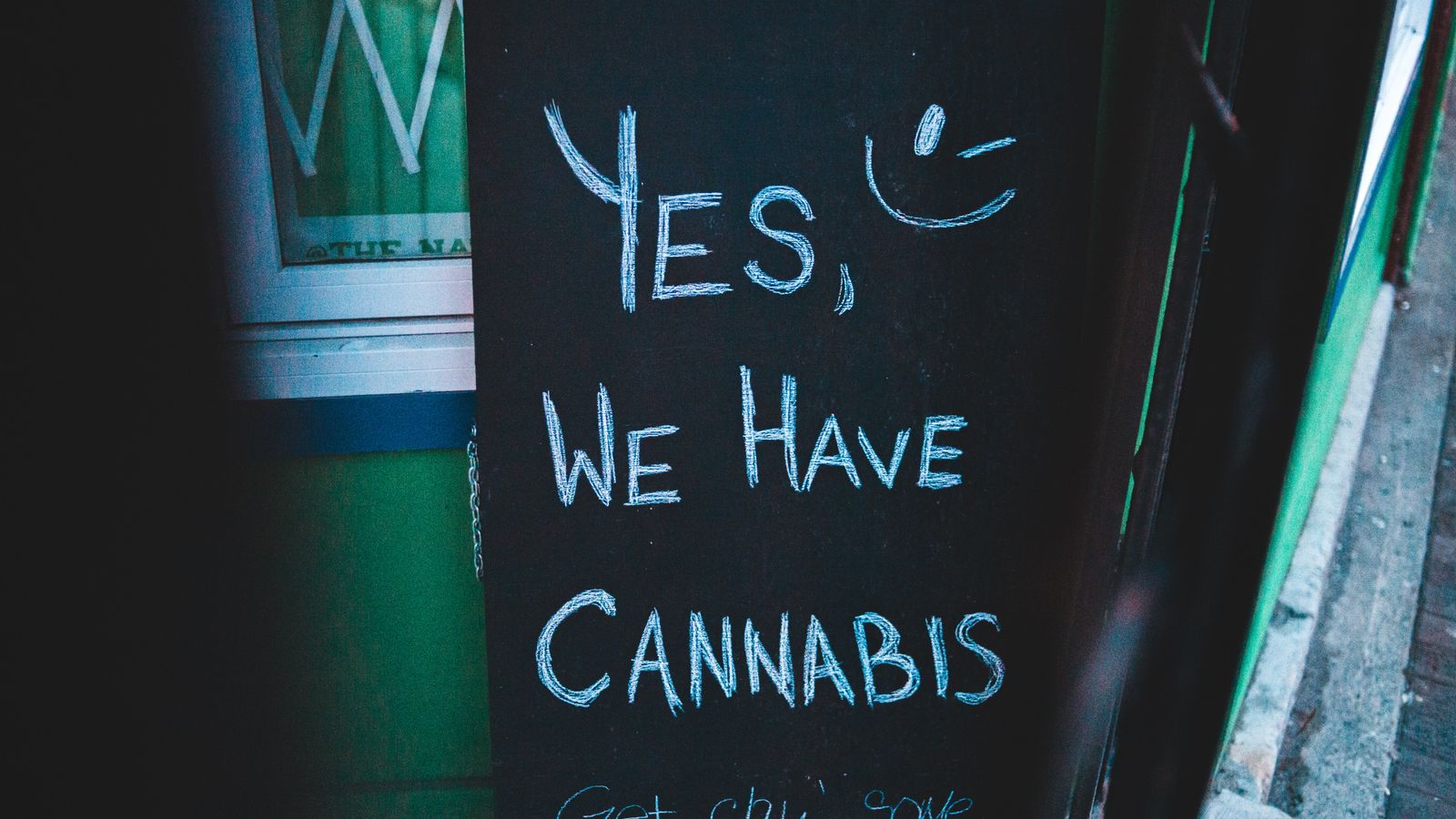
Lettering written on black chalkboard with cannabis offer near house on street of city
Enforcement Inconsistencies Undermine State Programs
State-legal operators face uneven enforcement even within their home markets, particularly around THCA flower and hemp-derived products. California's Department of Cannabis Control issued 47 cease-and-desist letters to licensed retailers in Q2 2026 for selling THCA flower sourced from hemp farms, despite the products testing below 0.3% delta-9 THC on a dry-weight basis. Ohio's Division of Cannabis Control? It's taken the opposite stance, explicitly allowing THCA flower sales at licensed dispensaries as of June 2026.
The split reflects unresolved federal ambiguity. The 2018 Farm Bill legalized hemp with ≤0.3% delta-9 THC but didn't address THCA, which converts to delta-9 upon heating. DEA's 2020 interim final rule attempted to impose a total-THC standard (delta-9 + THCA × 0.877), yet enforcement remains inconsistent across USDA-regulated hemp and state-regulated cannabis markets.
Regulatory Rollout Delays Stall Market Access
New adult-use states are missing their own launch deadlines by an average of 14 months, according to a July 2026 analysis by the Cannabis Regulators Association. Maryland voters approved adult-use in November 2022 with a statutory July 2023 start date. First licensed sales? March 2024. Minnesota's OCM projected January 2025 retail availability but now estimates Q1 2027 for the first dispensary licenses.
Rulemaking bottlenecks drive the delays. So do local opt-out provisions and social-equity application backlogs. In New York, the Office of Cannabis Management has issued 163 conditional adult-use retail licenses since December 2022, but only 41 are operational as of July 2026 due to real-estate and financing obstacles.
Banking and Tax Burdens Persist Post-Rescheduling
IRS Section 280E still applies to Schedule III cannabis businesses, disallowing most operating deductions and inflating effective tax rates above 50% for many MSOs. Treasury issued guidance in March 2025 clarifying that rescheduling to Schedule III doesn't exempt cannabis from 280E, contrary to industry expectations. Curaleaf reported a 52% effective tax rate in its Q1 2026 earnings—down from 68% under Schedule I but still triple the rate for non-cannabis C-corps.
Banking access has improved marginally. As of June 2026, 873 depository institutions filed SARs for cannabis-related accounts, up from 797 in December 2024, according to FinCEN. Major national banks remain absent, though, forcing operators to rely on regional credit unions and fintech intermediaries.
Interstate Commerce Remains Federally Prohibited
Schedule III rescheduling didn't authorize interstate cannabis shipments, leaving each state market siloed and preventing economies of scale. Oregon producers sitting on surplus inventory can't legally ship to undersupplied markets in Illinois or New Jersey. The result? Oregon wholesale flower prices averaged $310 per pound in Q2 2026, while Illinois wholesalers paid $1,840 per pound for comparable biomass, per BDSA data.
Congressional proposals to allow interstate commerce—most recently the GRAM Act introduced in May 2026—have stalled in committee. Without federal authorization, state-legal operators can't access the cost efficiencies that drove consolidation in alcohol and tobacco.
Local Opt-Outs Fragment State Markets
Even in adult-use states, local jurisdictions retain veto power over dispensaries, creating cannabis deserts within legal markets. In Michigan, 1,038 of the state's 1,773 municipalities (58%) prohibit retail cannabis as of July 2026, forcing residents in those areas to drive 30+ miles or rely on unlicensed delivery services. New Jersey's 565 municipalities split nearly evenly: 52% allowing retail, 48% opting out.
The fragmentation undercuts tax-revenue projections. California's 2024-25 cannabis tax receipts totaled $1.1 billion, 23% below the state's original forecast, in part because Los Angeles County's unincorporated areas and 67 of its 88 cities prohibit storefront retail.
What Comes Next
Operators and advocates are watching three variables: congressional action on banking and interstate commerce, DEA's final rescheduling rule (expected Q4 2026), and state-level efforts to preempt local bans. For context on how these gaps emerged, see the CannIntel topic hub on cannabis legalization implementation. Enforcement will keep varying. California's total-THC stance and Ohio's THCA tolerance represent the poles of a debate that remains unsettled at the federal level.
Sources
The cannabis newsletter you forward to your team.
Federal policy, market data, grower alerts, and the one story that matters today. Sent every weekday at 7am. Free.
No spam. Unsubscribe with one click. 21+ only.
Related from Laws

NORML Intern Draws Parallels Between Alcohol, Cannabis Prohibitions
Summer intern Caroline Breen outlines structural failures shared by both 20th-century prohibitions in policy analysis.

Jamaica State Minister Defends Deliberate Cannabis Reform Approach
Government official characterizes industry restructuring as measured and focused on local stakeholder interests.
Morris County Announces Arrests in Large-Scale Smoke Shop Sweep
Law enforcement arrested multiple individuals following coordinated raids on unlicensed retailers across New Jersey's Morris County.
More from the newsroom

Small Minnesota City Pauses Funding for Government-Owned Dispensary
A Minnesota municipality has suspended capital allocations for its planned public-sector cannabis retail facility amid budget concerns.

New York Unveils Cannabis Education Resources for Schools
State releases curriculum guides and teacher training materials as districts grapple with youth prevention in adult-legal market.

Federal Prosecutors Charge California Cannabis Advocate With Fraud
Joanne Kruse, longtime California cannabis activist, faces wire fraud and money laundering charges in federal court.