Study: Canadians Now Use Cannabis Daily More Than Alcohol
A new study reported Nov. 23 finds daily cannabis use outpacing daily drinking among Canadians, with younger adults driving the shift.
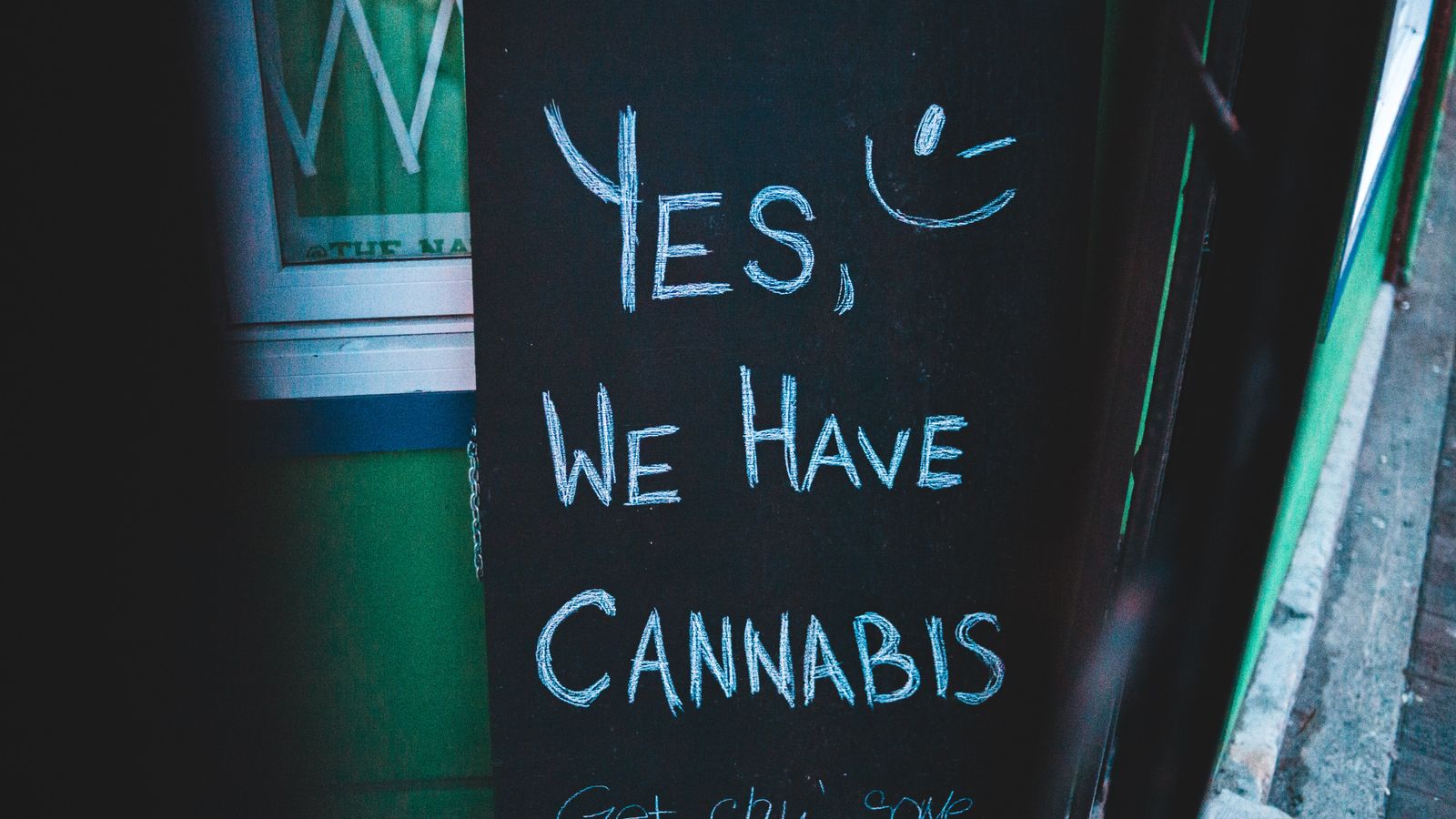
Lettering written on black chalkboard with cannabis offer near house on street of city
A bar stool, a dispensary counter, and a country in transition
Picture two Friday-night scenes a few blocks apart in any Canadian city: a half-empty pub, and a licensed cannabis shop with a line out the door. That image, once a punchline, now has a study behind it.
Yahoo News Canada reported on Nov. 23 that a new study found more Canadians are turning to cannabis than to alcohol on a daily basis. Younger Canadians, the report said, are leading the pack. The full methodology, sample size and authorship sit behind the original coverage, and CannIntel hasn't independently reviewed the underlying data. We're reporting the headline finding as it was published.
Even so, the direction of travel won't surprise anyone who has watched the Canadian market mature. Legalization arrived in October 2018. The years since have been a slow-motion experiment in what happens when a country normalizes a plant it once criminalized.
Daily use is the telling metric. Occasional use tells you about novelty. Daily use tells you about habit, about what has quietly moved into the routine of an ordinary evening. If daily cannabis now outranks daily drinking, the plant has graduated from curiosity to staple.
Why the youngest adults are driving the change
Younger consumers are setting the pace because they have the least loyalty to alcohol and the most comfort with legal cannabis. They came of legal age in a country where a licensed storefront was simply part of the retail map.
That generation also arrived with different attitudes about drinking itself. Wellness culture, sober-curious movements and the rise of non-alcoholic beverages have all chipped at the old social script that a night out requires a drink in hand. Cannabis slots neatly into the gap, whether it's smoked, vaped, or taken as an edible or a THC-infused beverage.
Walk into a Toronto or Vancouver retail shop and the shelf tells the story. Pre-rolls, gummies and drinkable formats sit next to flower, aimed squarely at people who want a predictable, low-ceremony experience. The product mix reflects a customer who treats cannabis the way an earlier generation treated a glass of wine with dinner.
Operators have noticed. Retailers across the country have spent years tuning their floors, staffing and hours around a customer base that skews younger and shops more often than the market was originally modeled to expect. If the finding holds, the study validates that bet.
Alcohol hasn't vanished. Drinking remains deeply embedded in Canadian social life, from hockey-night living rooms to wedding receptions. But a daily-use crossover is a symbolic line, and symbols matter in a market still arguing about its own legitimacy.
What it means for retailers, regulators and public health
A cannabis-over-alcohol daily habit reshapes the stakes for retailers, provincial regulators and public health officials alike. Each group reads the same number and draws a different conclusion.
For retailers and licensed producers, the finding reads as demand durability. Frequent, habitual users are the backbone of repeat sales, and a customer who returns daily is worth far more than one who dabbles on weekends. It also strengthens the argument for the legal market in its long fight against illicit supply, since a habitual consumer is exactly the buyer a licensed shop most wants to keep.
Provincial regulators, who control distribution and retail across much of the country, face a familiar tension. Governments earn revenue from legal cannabis, and they also carry responsibility for the harms of heavier use. A younger, more frequent consumer raises the temperature on questions about potency limits, packaging, advertising rules and age-gating.
Public health is where the finding cuts sharpest. Daily use carries a different risk profile than occasional use, and the concern with younger users is well established in the research literature: developing brains and heavy THC exposure are a pairing health officials watch closely. A headline that celebrates market maturity can look very different through a clinical lens.
That duality is the real story. The same data point is a sales win and a prevention challenge. Operators, regulators and clinicians are all looking at one number and reading three different stories.
There's a cultural-tourism angle worth tracking, too. Canada has leaned into cannabis as part of its hospitality identity, with consumption-friendly venues, cannabis-themed tours and retail destinations drawing visitors curious about a legal market next door to a country where federal law still treats the plant as a controlled substance. A domestic population that treats cannabis as an everyday habit makes that hospitality pitch easier, not harder. Visitors see a market that behaves like a normal part of life rather than a novelty act.
Legalization advocates predicted that normalization, and skeptics feared it. Both camps can claim vindication from the same headline, which tells you how unsettled the debate remains eight years in.
For the industry, the lesson is to read the data soberly. A daily-use crossover is good news for demand and a flag for responsibility. Retailers who treat it only as a growth signal are ignoring half the picture.
It's also worth being clear about what the study can and can't tell us. Self-reported surveys on substance use carry known limits, including recall bias and shifting definitions of what counts as daily. Before anyone rewrites a business plan or a policy memo around the finding, the underlying numbers deserve a close read.
That's the honest caveat sitting under an eye-catching headline. The direction feels right. The precision is still unverified.
For full background on how consumption has shifted since legalization, see the CannIntel topic hub on Canada cannabis consumption trends. The story spans Ontario, British Columbia, Quebec and Alberta, each with its own retail model and its own regulator.
The comparison with alcohol is the part that will travel. Alcohol has been the default social lubricant of Canadian life for generations, and a finding that cannabis has overtaken it on daily use will get repeated well beyond the cannabis trade press. Expect it in provincial budget debates, in public health briefings and in the sales decks of every licensed producer pitching investors.
The conversation about edibles, beverages and other non-smoked formats will pick it up as well. Younger consumers favor products that fit a routine without the ritual of rolling or smoking, and the format shift is part of what makes daily use easier to sustain.
One thing is clear from the signal alone. The plant has moved from the margins of the evening to its center for a growing slice of the country.
Sources
The cannabis newsletter you forward to your team.
Federal policy, market data, grower alerts, and the one story that matters today. Sent every weekday at 7am. Free.
No spam. Unsubscribe with one click. 21+ only.
Related from Culture

Study: Cannabis Now Outpaces Alcohol Among Younger Canadians
A study reported by Yahoo News Canada finds cannabis has overtaken alcohol in popularity among younger Canadians, a shift that reorders the legal market's core consumer.

Canada: Daily Cannabis Use Tops Daily Drinking for Under-50s
A Toronto Star report says daily cannabis use now outpaces daily alcohol use among Canadian adults under 50, a threshold few predicted when legalization began.

Bone Thugs-N-Harmony's Flesh-N-Bone Says Group Is Busier Than Ever
The Cleveland rap group's OG member told Cannabis Now the weed-rap pioneers are as active as at any point in their three-decade run.
More from the newsroom

California Clears 2,000+ Pounds of Trash From Illegal Cannabis Grow
A reported cleanup of more than 2,000 pounds of debris at an unlicensed grow puts the environmental cost of illicit cultivation back in front of California regulators.

Rochester Dispensaries Brace for 2026 Green Wednesday Rush
Retailers in upstate New York staff up and stock deep ahead of the day before Thanksgiving, one of cannabis retail's busiest sales days.

NH Lawmaker Predicts Medical Home Grow Bill Passes in 2027
A New Hampshire representative says the Legislature will pass a medical marijuana home-cultivation bill next year, but the governor's desk remains the unresolved obstacle.