Sacramento Advances Commercial Cannabis Zoning Ordinance
City officials moved forward on regulations expected to unlock new retail and cultivation sites.
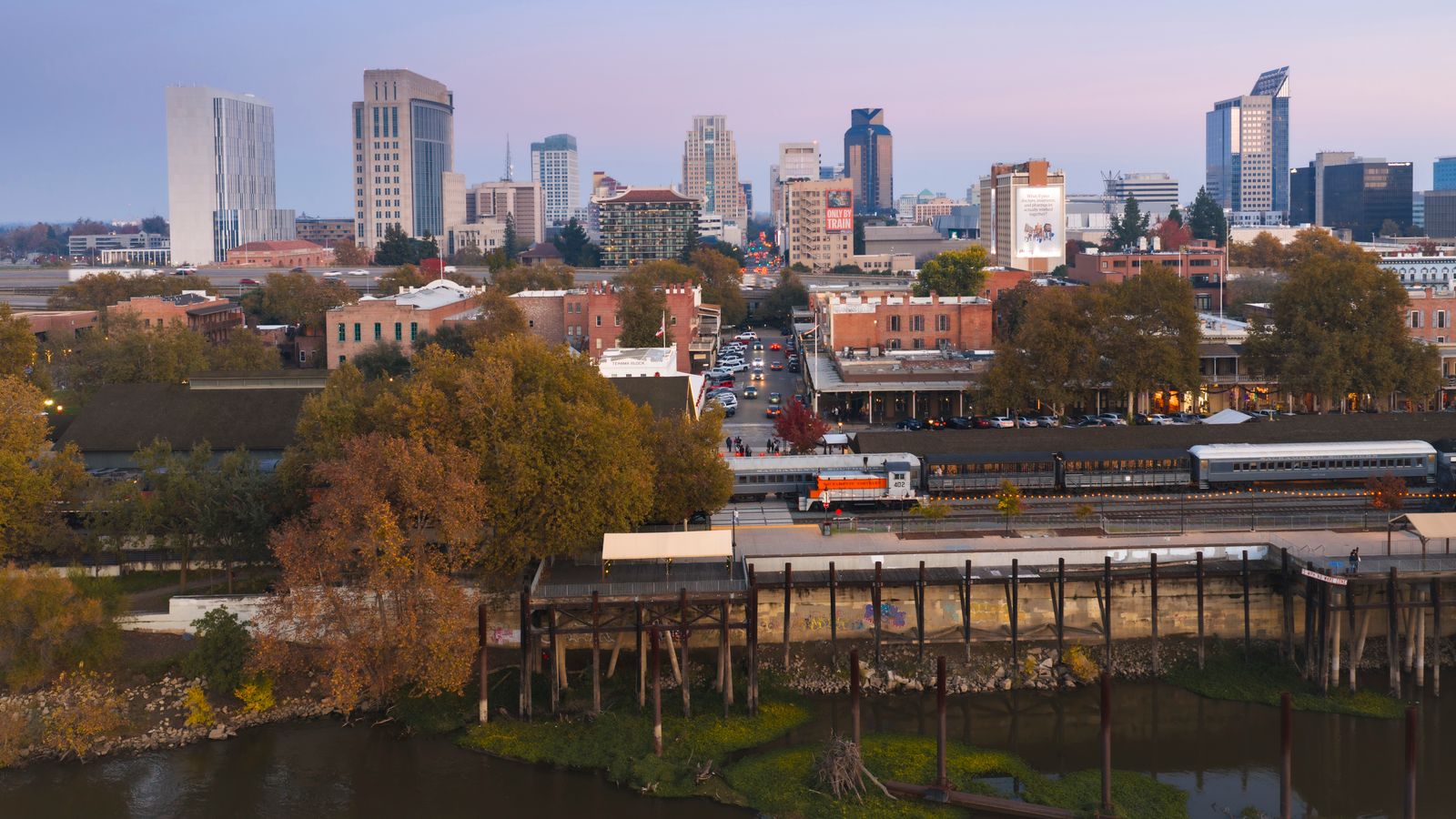
A beautiful twilight aerial view of Sacramento's urban skyline with historic Old Sacramento in foreground.
Zoning Framework Clears Key Hurdle
Sacramento's city council advanced a commercial cannabis zoning ordinance that permits retail dispensaries and cultivation facilities in designated commercial and industrial corridors. The ordinance, which moved forward July 7, expands the geographic envelope for licensed operators beyond the narrow buffer zones established under the city's 2017 pilot framework. According to the Sacramento News & Review, the measure passed a preliminary vote and now heads to final reading later this month.
The framework permits storefront retail in C-2 and C-3 commercial zones, provided operators maintain 600-foot buffers from schools and 300-foot buffers from youth centers. Cultivation and manufacturing uses are permitted in M-1 and M-2 industrial zones without additional conditional-use permits. That's a departure from the prior case-by-case approval process that added six to nine months to licensing timelines.
For operators, the change matters. Sacramento currently hosts 33 licensed dispensaries serving a metro population of 2.4 million—a per-capita density roughly half that of San Jose or Oakland. The expanded zoning could accommodate an additional 15 to 20 retail sites, according to local industry estimates, though final buildout will depend on state licensing capacity and local demand.
Investor Implications and Comparable Markets
The bull case hinges on Sacramento's status as an underserved metro with high tourist and commuter traffic from the Bay Area. Dispensaries in the downtown and midtown corridors—newly eligible under the ordinance—stand to capture both resident demand and pass-through consumer spend. California's track-and-trace data shows Sacramento County retail sales of $287 million in 2025, up 4.2% year-over-year. That's a modest growth rate reflecting constrained supply rather than demand saturation.
Comparable California metros offer a valuation lens. San Jose, with roughly 1 million residents, supports 55 licensed dispensaries. Oakland, at 440,000 residents, supports 29. Sacramento's current 33 licenses serve a population nearly three times Oakland's size. If Sacramento reaches parity with San Jose on a per-capita basis, the market could support 50 to 55 retail licenses—implying 17 to 22 net new entrants over the next 24 months.
The bear case: California's retail cannabis market remains oversupplied at the state level, with wholesale flower prices down 38% since 2022. New entrants in Sacramento will face the same margin compression and 280E tax burden that have driven 140+ dispensary closures statewide since January 2025. Zoning expansion doesn't solve the structural tax problem or the illicit-market price gap, which the California Department of Cannabis Control estimates at 30% to 40% in the Central Valley.
What Comes Next
The ordinance requires a second council vote, expected by July 28, before taking effect 30 days later. Assuming passage, the city's planning department will begin accepting applications for retail and cultivation permits in the newly eligible zones by early September. Operators should note that state licensing remains the binding constraint—the California Department of Cannabis Control has issued fewer than 900 active retail licenses statewide, and the agency's backlog for new applications currently runs four to six months.
For context on Sacramento's evolving regulatory posture and market structure, see the CannIntel topic hub on Sacramento Cannabis Market. The city's 2017 pilot program capped licenses at 30 and imposed strict geographic constraints; this ordinance represents the first major liberalization since that framework launched. Whether expanded zoning translates to expanded operator profitability will depend on execution, capital access, and the still-unresolved question of federal rescheduling and its impact on 280E.
Watch the final vote tally on July 28 and any amendments to buffer distances or permit caps. If the ordinance passes without material changes, expect a wave of site-acquisition activity in midtown Sacramento and the Arden-Arcade corridor, where commercial rents remain 20% to 30% below downtown but foot traffic and demographics support retail cannabis. We'll be tracking permit applications and any early movers securing leases in the newly opened zones.
Frequently asked questions
When does Sacramento's new cannabis zoning ordinance take effect?
The ordinance requires a second council vote, expected by July 28, 2026. If approved, it takes effect 30 days later, with the city planning department accepting new permit applications by early September.
How many cannabis dispensaries does Sacramento currently have?
Sacramento currently has 33 licensed dispensaries serving a metro population of 2.4 million. This represents roughly half the per-capita dispensary density of comparable California metros like San Jose and Oakland.
What buffer requirements apply to new cannabis dispensaries in Sacramento?
The ordinance requires 600-foot buffers from schools and 300-foot buffers from youth centers for retail dispensaries. Cultivation and manufacturing in industrial zones don't require additional conditional-use permits under the new framework.
Will Sacramento's zoning changes increase cannabis operator profitability?
Expanded zoning opens new sites but doesn't resolve structural challenges like 280E tax burdens, wholesale price compression, or illicit-market competition. Profitability will depend on execution, capital access, and macro factors including potential federal rescheduling.
Sources
The cannabis newsletter you forward to your team.
Federal policy, market data, grower alerts, and the one story that matters today. Sent every weekday at 7am. Free.
No spam. Unsubscribe with one click. 21+ only.
Related from Business
New York Operator Spends Five Years, $100K to Secure Cannabis License
A first-person account exposes the financial and temporal costs of navigating New York's social-equity licensing regime.

Courts Rule Cannabis Companies Face Liability for Capital-Raising Violations
Recent rulings hold cannabis operators accountable for securities and lending compliance failures during fundraising and deployment.

OMB Proposes Cannabis Industry Classification in NAICS 2027 Update
Federal statistical framework would recognize cannabis as distinct economic sector for first time.
More from the newsroom

Woman Found Dead at Illegal Mendocino County Cannabis Grow Site
Mendocino County Sheriff's Office seeks suspects after woman's body discovered at unlicensed cultivation operation.

Michigan Supreme Court Blocks Federal-Law Basis for Cannabis Probation Bans
State's highest court rules probation officers cannot cite federal prohibition alone to restrict legal marijuana use.

Woman Found Fatally Shot at Illegal Cannabis Grow Near Covelo
Mendocino County Sheriff's Office is investigating the homicide at an unlicensed cultivation site in rural Northern California.