Cambridge and Somerville Cannabis Operators Call Question 8 'Doomsday'
Local dispensary owners warn Massachusetts ballot measure could force closures and eliminate jobs across the metro market.
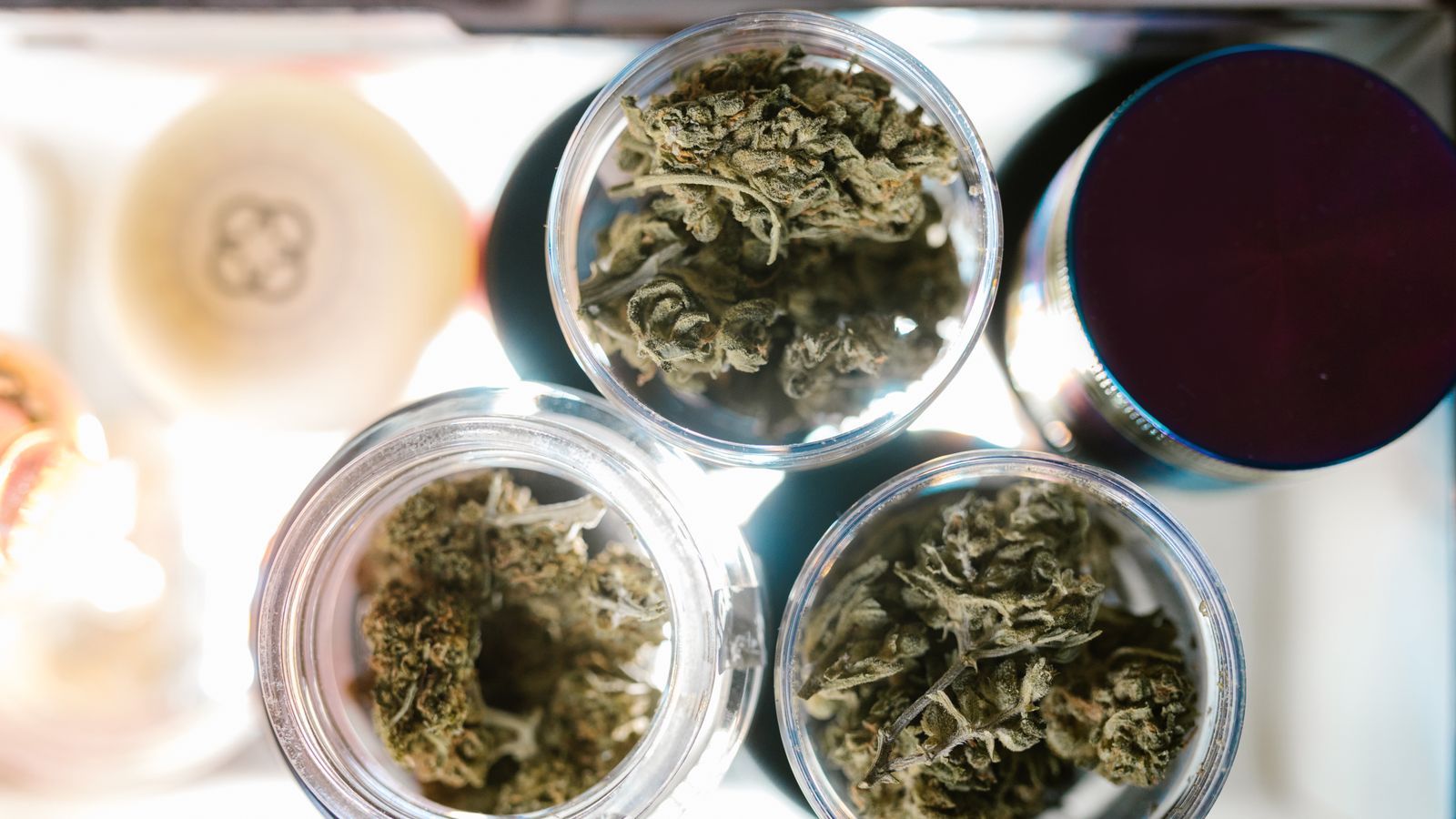
Close-up of cannabis buds in jars from above, highlighting marijuana storage.
The Operator Case Against Question 8
Local dispensary owners describe Question 8 as a "doomsday scenario" that would eliminate the majority of their product inventory and force mass layoffs. The ballot measure would cap THC content at 10% for flower, 25% for concentrates, and 5mg per edible serving. Those levels sit far below consumer demand and can't compete with neighboring states, operators say.
Cambridge and Somerville host eight of the state's 250+ adult-use licenses. They operate in a market where average flower potency runs 18-24% THC. Retailers in the corridor say the 10% flower cap would eliminate roughly two-thirds of their current SKUs. One operator told local press the measure would force them to choose between compliance and viability.
The initiative also grants municipalities new authority to ban dispensaries outright through local referendum. Cambridge operators worry this provision could reverse years of local licensing progress. Somerville issued its first adult-use licenses in 2023 after a multi-year approval process.
Revenue and Employment at Risk
Operators estimate Question 8 could cut gross revenue by 50-70% in the first year if enacted, with corresponding job losses across retail, cultivation, and manufacturing. Massachusetts adult-use sales totaled $1.8 billion in fiscal 2025. The Cambridge-Somerville corridor represents an estimated 6-8% of statewide volume.
The state's 280E tax burden already compresses margins to single digits for most retailers—federal law disallows standard business deductions for cannabis operators. A 50% revenue drop would push the majority of operators below breakeven, according to industry analysts. Cambridge-based dispensaries employ an estimated 120-150 full-time-equivalent workers. Somerville operators employ roughly 80-100.
Best case for operators: Question 8 fails at the ballot, as did a similar 2022 Oregon measure. Worst case: passage triggers a multi-quarter inventory liquidation, lease defaults, and a wave of license surrenders that reshapes the state's competitive map.
What Happens If Question 8 Passes
If voters approve the measure in November, the Cannabis Control Commission would have 180 days to implement new potency testing and labeling rules. Existing inventory above the caps would likely be subject to a six-month sell-through window, though the initiative's text doesn't specify transition provisions.
Operators would face a choice. Reformulate product lines to comply with the caps. Exit high-potency categories entirely. Or pursue legal challenges on preemption grounds. Massachusetts law currently allows municipalities to regulate the number and location of dispensaries but not product composition—a state-level function. Legal experts say Question 8's dual structure (state potency caps plus local bans) could face constitutional scrutiny.
For context on the broader Massachusetts regulatory fight, see the CannIntel topic hub on Question 8.
Polling data is sparse. A September 2026 UMass Amherst survey showed 48% support, 39% opposition, and 13% undecided—within the margin of error. Turnout models favor opponents in midterm cycles, but Question 8 backers have outspent the opposition $4.2 million to $1.1 million as of the last campaign-finance filing.
Frequently asked questions
What does Massachusetts Question 8 do?
Question 8 caps THC at 10% for flower, 25% for concentrates, and 5mg per edible serving. It also allows cities and towns to ban dispensaries through local ballot measures, overriding existing state licensing.
How many dispensaries operate in Cambridge and Somerville?
Eight adult-use dispensaries operate across the two cities, employing an estimated 200-250 workers. The corridor represents roughly 6-8% of Massachusetts's $1.8 billion annual adult-use market.
What happens to existing high-potency inventory if Question 8 passes?
The initiative doesn't specify a transition period. Operators expect a six-month sell-through window, but the Cannabis Control Commission would set the final rule within 180 days of enactment.
Could Question 8 face legal challenges?
Yes. Massachusetts law assigns product-composition authority to the state, not municipalities. The measure's dual structure—state potency caps plus local bans—could be challenged on preemption grounds if enacted.
When is the vote on Question 8?
November 5, 2026. Current polling shows 48% support, 39% opposition, and 13% undecided. Proponents have outspent opponents $4.2 million to $1.1 million in the campaign.
Sources
The cannabis newsletter you forward to your team.
Federal policy, market data, grower alerts, and the one story that matters today. Sent every weekday at 7am. Free.
No spam. Unsubscribe with one click. 21+ only.
Related from Business
Canopy Growth Begins Supplying Medical Cannabis to U.K. Market
Canadian cannabis producer secures U.K. medical supply contract as European medical markets expand.

New York Cannabis Operators Pay Workers Above Market Despite Losses
Licensed dispensaries in New York pay staff 18-22% more than retail peers, even as most operators run negative margins.

Curaleaf Stock Jumps 6% on Aurora Bid Speculation, Florida Push
TSX:CURA climbed 6.12% Tuesday as investors bet on Aurora Cannabis takeover rumors and Florida adult-use momentum.
More from the newsroom
Vireo Growth Acquires Nevada Dispensary for $500K Cash
The Minnesota-based MSO expands its western footprint with a bargain-priced retail asset in Las Vegas.

Delaware updates enforcement statute to reflect cannabis oversight role
State legislation renames alcohol and tobacco enforcement officers to include marijuana enforcement duties.

Trulieve Added to S&P Total Market and Completion Indices
The Florida MSO joins S&P's broad-market benchmarks, signaling institutional recognition despite federal Schedule I status.