Illinois Report Sets $5M Monthly Cannabis Sales Record for July
DFPR and CROO's 2026 Annual Cannabis Report shows a July sales record and 9% year-over-year growth in August, following a doubling of purchase limits.
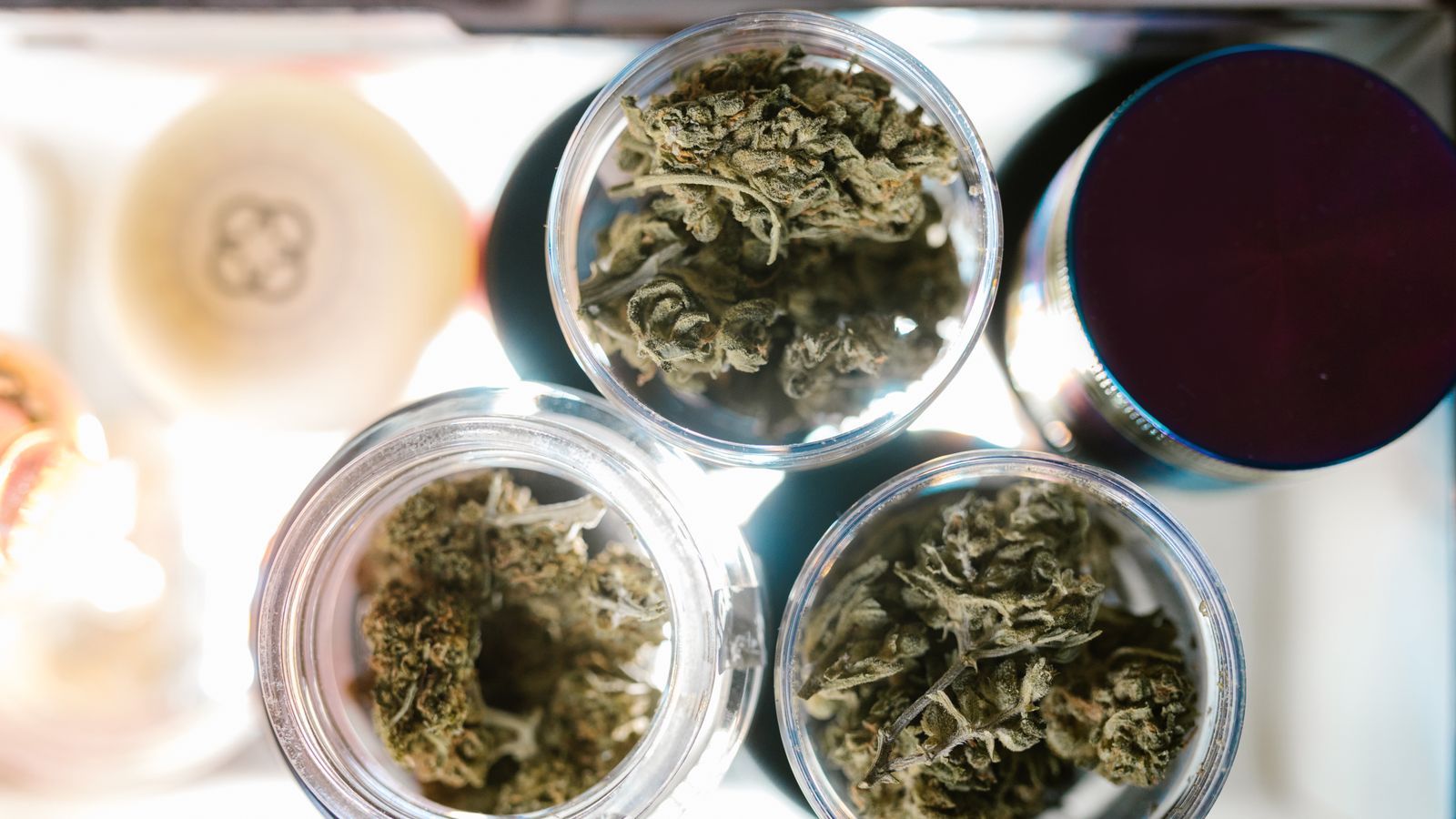
Close-up of cannabis buds in jars from above, highlighting marijuana storage.
July Sets the Record, August Holds Close
Illinois retailers posted a record $5 million in July and $4.9 million in August, according to the state's 2026 Annual Cannabis Report.
The report comes from the Department of Financial and Professional Regulation (DFPR) and the Cannabis Regulation Oversight Office (CROO). Ganjapreneur's summary of it describes the trend as renewed sales growth.
Here's what the summary establishes:
- July 2026: a new monthly record of $5 million.
- August 2026: $4.9 million, a 9% increase over August 2025.
- Source: the State of Illinois' 2026 Annual Cannabis Report, from DFPR and CROO.
- Stated context: the headline ties the record to a doubling of purchase limits.
On rounded figures, August landed about 2% below July. That's a plateau, not a slide.
The Purchase-Limit Link Is Reported, Not Yet Proven
The summary connects the record to doubled purchase limits but doesn't supply the limit amounts, the effective date, or any causal analysis.
We don't know the prior and new caps. We don't know whether the change applied equally to residents and non-residents. The summary doesn't say, and we won't guess.
A record that coincides with a policy change is a story, but a record caused by that change is a claim, and it needs the month-by-month series to support it. Not yet.
One more caveat: the summary presents both figures as monthly totals, and operators building models should confirm the measurement basis against the full report before using them.
On a Strict Reading of 280E, Volume Doesn't Buy Deductions
Higher sales don't expand what a licensee can deduct under IRC §280E, so growth in revenue can flow disproportionately into federal taxable income.
Section 280E disallows ordinary business deductions for trades or businesses trafficking in controlled substances. Cost of goods sold, computed under the inventory rules, remains available. Everything else, including rent, payroll outside production, and marketing, is generally disallowed for a licensee to which the section applies.
The arithmetic is simple. If a retailer's basket size rises because customers can legally buy more per transaction, gross profit rises with it. Overhead largely doesn't move, and none of it is deductible anyway.
Revenue up, COGS up, deductions flat, tax bill up. The math is brutal.
Illinois's own tax treatment sits in its state revenue code and isn't addressed in the summary. Operators should read their state-level returns separately from the federal analysis.
The Operator and Investor Lens
For retailers, a doubled purchase limit changes the compliance surface as much as the sales line.
Any limit change touches several controls. Checklist items worth confirming internally:
- Point-of-sale systems enforce the new cap correctly and reject transactions above it.
- Inventory reconciliation reflects larger per-transaction depletion without variance flags.
- Cash handling and bank deposit procedures scale with higher ticket sizes.
- Staff training and written procedures reflect the new limits, not the old ones.
For investors, the number worth watching is the 9% year-over-year gain. Illinois is a mature adult-use market, and growth in the high single digits there is a different signal from growth in a newly opened state. But one month of comparison isn't a trend. A limit change can also pull forward demand before it settles.
What to Watch Next
The next data points will show whether the July record was a ceiling or a new base.
Watch for September figures from DFPR and CROO, the full monthly series in the annual report, and any disclosure of the exact purchase-limit rule and its effective date. Also watch how licensed operators in Illinois describe basket size and transaction counts in their own reporting. For full background on this story, see the CannIntel topic hub on Illinois cannabis sales.
The next signal: September's number. If it holds near $5 million, the limit change looks structural, and every 280E-bound operator in Illinois should model the tax effect accordingly.
Frequently asked questions
What did Illinois cannabis sales reach in July 2026?
Illinois cannabis retailers set a new monthly record of $5 million in July 2026, according to the State of Illinois' 2026 Annual Cannabis Report from the Department of Financial and Professional Regulation (DFPR) and the Cannabis Regulation Oversight Office (CROO).
How much did Illinois cannabis sales grow in August 2026?
August 2026 sales reached $4.9 million, a 9% increase from August 2025, according to the same DFPR and CROO report as summarized by Ganjapreneur.
Did doubled purchase limits cause the sales record?
The headline links the record to doubled purchase limits, but the available summary doesn't provide the old and new limits, the effective date, or a causal analysis. The connection is reported, not demonstrated, until the monthly series is reviewed.
How does IRC §280E affect Illinois cannabis retailers?
Section 280E disallows ordinary business deductions for trafficking in controlled substances, leaving cost of goods sold as the main available offset for licensees it covers. Higher sales therefore raise gross profit without expanding deductions, which can increase federal taxable income.
Sources
The cannabis newsletter you forward to your team.
Federal policy, market data, grower alerts, and the one story that matters today. Sent every weekday at 7am. Free.
No spam. Unsubscribe with one click. 21+ only.
Related from Business

Illinois Report Shows Cannabis Sales and Taxes Fell as Prices Dropped
A new state report shows Illinois shoppers bought more cannabis at lower prices, but total sales revenue and tax collections still declined.
Tilray Beverage Growth vs. Cannabis Weakness: The Tax Read
Kalkine Media asks whether Tilray's beverage business can offset cannabis softness; a tax and segment-level reading shows what the answer depends on.

Illinois Cannabis Use Rises While State Tax Revenue Dips
The Chicago Sun-Times reported Oct. 12 that Illinois consumption is climbing as cannabis tax collections slip, a split with consequences for state budgets and operators.
More from the newsroom

Virginia releases draft rules for recreational cannabis sales
Virginia's draft sales rules, released Oct. 12, 2026, give operators their first look at the regulatory text behind a retail launch slated for 2027.

Study Finds Cannabis Hospitalisations Up 49% in a Decade
A study reported by Mirage News puts the ten-year rise at 49%. The paper's geography, definitions and denominators will decide what that number means.

Idaho Sets Nov. 3 Vote on Legislature's Sole Power to Legalize Marijuana
A ballot question would decide whether only lawmakers, not voters, can legalize marijuana in Idaho, a state with no adult-use or medical market.