Cannabis Credit Union Builds Banking Workaround Amid Federal Access Gap
A credit union has structured services around cannabis operators despite ongoing federal banking restrictions.

A flat lay of assorted credit and debit cards from various banks. Ideal for finance and banking concepts.
Credit Union Model Bypasses Federal Banking Roadblock
The credit union has built a compliance-heavy infrastructure that allows it to serve cannabis operators without triggering federal enforcement risk. According to High Times Magazine, the institution uses enhanced due diligence, transaction monitoring, and suspicious activity reporting protocols that exceed standard Bank Secrecy Act requirements. It's expensive. Compliance costs per cannabis account can run 3-5 times higher than traditional business accounts, but the model fills a gap that national banks won't touch.
State-chartered credit unions operate under different regulatory oversight than federally insured banks. That distinction has allowed a small number of institutions to serve cannabis clients, though most remain wary of federal prosecution risk under the Controlled Substances Act.
SAFE Banking Act Stalled Again in 2026
Federal cannabis banking reform remains gridlocked despite seven years of legislative attempts. The Secure and Fair Enforcement (SAFE) Banking Act passed the House six times between 2019 and 2025 but has never cleared the Senate. The most recent attempt, attached to the 2026 National Defense Authorization Act, was stripped in conference committee in July.
Without SAFE Banking or similar federal protection, financial institutions serving cannabis businesses operate in a legal gray zone. The 2013 Cole Memo and 2014 FinCEN guidance provided informal enforcement forbearance, but those documents carry no statutory weight and can be rescinded by any administration.
Compliance Costs Create Two-Tier Banking System
Cannabis operators pay 5-10 times more for basic banking services than comparable non-cannabis businesses. Industry data shows monthly account fees ranging from $1,500 to $5,000 for cannabis checking accounts, compared to $50-$200 for standard business accounts. Transaction fees, cash-handling surcharges, and mandatory compliance audits add tens of thousands in annual costs.
The compliance burden is so high that only mid-sized and large operators can afford full banking relationships; smaller cultivators and retailers still operate largely in cash.
This two-tier system concentrates banking access among multi-state operators and well-capitalized licensees. Mom-and-pop dispensaries? They continue to face cash-management risks, employee safety concerns, and limited access to credit.
State Charters Offer Narrow Path Forward
State-chartered credit unions and community banks have more regulatory flexibility than national banks, but the model doesn't scale. Fewer than 700 financial institutions nationwide serve cannabis clients, according to FinCEN's most recent quarterly report. That's up from roughly 400 in 2019 but still represents less than 1% of U.S. depository institutions.
High Times Magazine profiled one of a few dozen credit unions that have made cannabis banking a core line of business. Most operate in states with mature legal markets—California, Colorado, Oregon, Washington—and rely on deep compliance expertise and close coordination with state regulators.
Federal Rescheduling Won't Solve Banking Access
The DEA's proposed rescheduling of cannabis from Schedule I to Schedule III wouldn't resolve the banking access problem. Schedule III substances remain controlled under federal law, and financial institutions would still face Controlled Substances Act liability for handling proceeds from cannabis sales. Only descheduling or explicit statutory safe harbor—such as SAFE Banking—would eliminate federal prosecution risk.
The rescheduling process, initiated by the Biden administration in 2023, remains under administrative review. The DEA hasn't published a final rule, and the timeline for implementation is unclear. Even if finalized, rescheduling would primarily affect tax treatment under IRC Section 280E, not banking access.
Industry Seeks Statutory Safe Harbor, Not Workarounds
Cannabis trade groups continue to push for federal legislation rather than state-level banking workarounds. The National Cannabis Industry Association, the Cannabis Trade Federation, and the U.S. Cannabis Council have all endorsed SAFE Banking as the only durable solution. Credit union models, while valuable, serve a fraction of the industry and don't address the systemic cash-management and security risks that affect thousands of small operators.
For full background on this story, see the CannIntel topic hub on Cannabis Banking Access.
The next legislative window opens in early 2027, when the new Congress convenes. Whether SAFE Banking or a similar measure can clear both chambers remains an open question—one the industry has been asking since 2013.
Frequently asked questions
Why can't most banks serve cannabis businesses?
Cannabis remains a Schedule I controlled substance under federal law. Banks fear prosecution under the Controlled Substances Act and Bank Secrecy Act for handling proceeds from federally illegal activity, even in states where cannabis is legal. Without statutory safe harbor, most institutions avoid the risk.
How do credit unions serve cannabis businesses when banks won't?
State-chartered credit unions operate under different regulatory oversight than federally insured banks. Some have built compliance-heavy infrastructures with enhanced due diligence, transaction monitoring, and reporting protocols that mitigate federal enforcement risk. The model is expensive and doesn't scale easily.
Would DEA rescheduling solve the cannabis banking problem?
No. Moving cannabis to Schedule III would still leave it a controlled substance under federal law. Financial institutions would face the same Controlled Substances Act liability. Only descheduling or explicit statutory protection like SAFE Banking would eliminate federal prosecution risk for banks.
What is the SAFE Banking Act?
The Secure and Fair Enforcement (SAFE) Banking Act would prohibit federal regulators from penalizing banks that serve state-legal cannabis businesses. It has passed the House six times since 2019 but has never cleared the Senate. Without it, cannabis banking remains a legal gray zone.
How much do cannabis businesses pay for banking services?
Monthly account fees range from $1,500 to $5,000 for cannabis checking accounts, compared to $50-$200 for standard business accounts. Compliance costs, transaction fees, and cash-handling surcharges add tens of thousands in annual expenses—5-10 times more than non-cannabis businesses pay.
Sources
The cannabis newsletter you forward to your team.
Federal policy, market data, grower alerts, and the one story that matters today. Sent every weekday at 7am. Free.
No spam. Unsubscribe with one click. 21+ only.
Related from Business

Illinois Cannabis Use Rises While State Tax Revenue Dips
The Chicago Sun-Times reported Oct. 12 that Illinois consumption is climbing as cannabis tax collections slip, a split with consequences for state budgets and operators.
Illinois Report Sets $5M Monthly Cannabis Sales Record for July
DFPR and CROO's 2026 Annual Cannabis Report shows a July sales record and 9% year-over-year growth in August, following a doubling of purchase limits.

Still River Wellness Workers Ratify 4-Year UFCW Contract
Torrington dispensary employees locked in a four-year deal with UFCW Local 371, giving Connecticut operators a rare long-dated labor cost marker.
More from the newsroom

Idaho Sets Nov. 3 Vote on Legislature's Sole Power to Legalize Marijuana
A ballot question would decide whether only lawmakers, not voters, can legalize marijuana in Idaho, a state with no adult-use or medical market.

Wholesaler Settles for $2M Over Illegal THC Product Sales
A wholesaler agreed to a $2 million settlement over illegal THC products, but the public record is thin on who, where and what was sold.
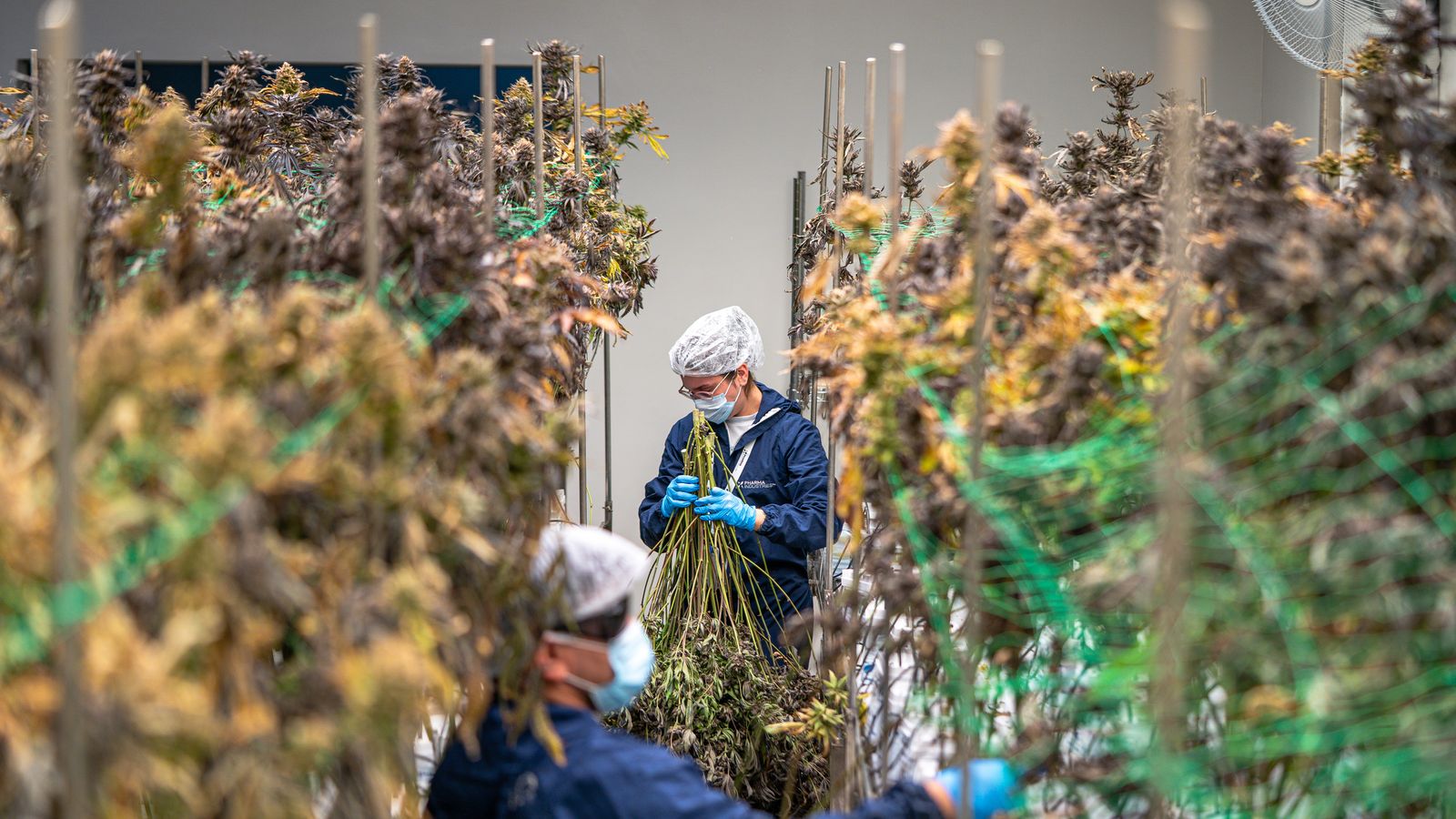
High Times Profiles Brute's Roots' Slow Pheno Bet in South Jersey
High Times Magazine profiled Brute's Roots on Oct. 12, framing the South Jersey operation's strategy around patience and phenotype selection.