Federal Cannabis Descheduling Bill: What It Would Change
This hub tracks federal legislation to deschedule cannabis, meaning to remove it from the Controlled Substances Act (CSA) altogether, and explains how that differs from rescheduling. It covers the Public Health and Research Reforms in Controlled Substances Act, introduced in October 2026 to deschedule cannabis and overhaul more than 50 years of drug scheduling policy. It also covers the legal mechanics, how descheduling compares with a move to Schedule III, and what it could mean for state-legal markets, taxes under Section 280E, banking, research, and interstate commerce. The page is updated as the bill advances through Congress.
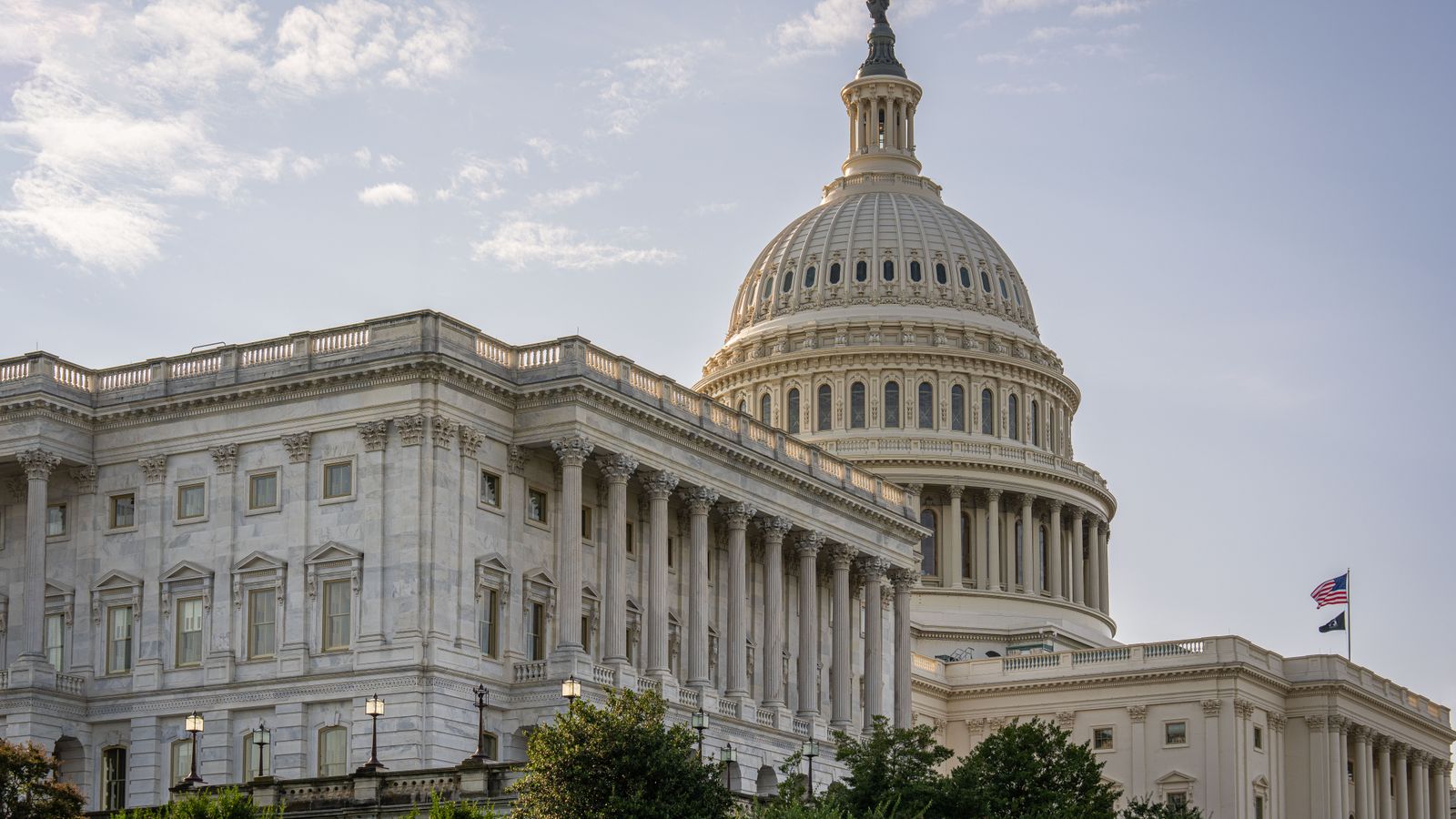
Executive summary
A congressman introduced the "Public Health and Research Reforms in Controlled Substances Act" on October 29, 2026, a bill that would deschedule cannabis and rewrite the scheduling machinery of the Controlled Substances Act (CSA) of 1970. According to Cannabis Business Times, the measure goes beyond marijuana and would overhaul more than 50 years of federal drug-scheduling policy.
Descheduling differs from rescheduling. Moving cannabis from Schedule I to Schedule III under 21 U.S.C. § 812 keeps the plant inside the CSA, with DEA registration, quotas and prescription-style controls. Descheduling removes it from the CSA, which leaves the Food, Drug, and Cosmetic Act and state law as the main regulators.
The distinction drives the money. Both routes would end the IRC § 280E tax penalty for plant-touching operators. Only full descheduling would clear the legal path for interstate commerce, banking normalization and a federal research regime unconstrained by Schedule I rules. Even then, Congress would need to write the commercial rules, and treaty obligations under the 1961 Single Convention complicate the picture.
This page explains where the new bill fits among earlier efforts: the MORE Act, the STATES Act, the Cannabis Administration and Opportunity Act, and the administrative rescheduling track that began with a 2023 HHS recommendation and a 2024 DEA NPRM. It also maps state-level implications and gives operators a decision framework. The bill's full text and sponsor details should be verified at Congress.gov, which is linked under further reading. This foundation will be updated as committee action, cosponsors and scoring emerge.
Why this matters
Federal scheduling touches every layer of the cannabis economy: taxes, banking, research, patient access, criminal law and interstate trade. A bill that deschedules instead of reschedules targets the root of those constraints.
Operators and investors
Under § 280E, businesses "trafficking" in Schedule I or II substances cannot deduct ordinary business expenses beyond cost of goods sold. Multi-state operators (MSOs) such as Curaleaf, Trulieve, Green Thumb and Verano have carried effective tax rates far above those of comparable non-cannabis companies for years. Descheduling and Schedule III both eliminate 280E exposure, because the statute applies only to Schedule I and II substances.
Patients and researchers
Schedule I classification requires researchers to obtain a DEA Schedule I registration and, historically, to source cannabis from a single federally authorized grower at the University of Mississippi. That bottleneck has limited rigorous study of cannabinoids such as CBD and THCA, and of terpenes such as myrcene and limonene. It has also limited study of how chemovars like OG Kush, Wedding Cake and Northern Lights differ in effect. The new bill's title signals that research reform is a core objective, not an afterthought.
States and consumers
Roughly 24 states plus the District of Columbia have adult-use markets, and about 40 states allow medical use. All of them operate in conflict with federal law. Descheduling would shift that dynamic from federal tolerance to a federal-state regulatory partnership, though the precise architecture depends on the bill text.
Criminal justice
Federal cannabis offenses remain on the books. Any descheduling bill raises questions about expungement, resentencing and retroactivity. Earlier proposals such as the MORE Act included those provisions, and advocates will examine whether the new bill does.
Background and history
Cannabis has sat in Schedule I since the CSA took effect in 1971, and every major reform effort since has run into the same structural obstacle: Congress, the executive branch and the courts each hold part of the key.
1970–1972: The CSA and the Shafer Commission
Congress enacted the Controlled Substances Act in 1970 as Title II of the Comprehensive Drug Abuse Prevention and Control Act. Cannabis was placed in Schedule I provisionally, pending the work of the National Commission on Marihuana and Drug Abuse, known as the Shafer Commission. The commission's 1972 report recommended decriminalizing personal possession, and President Nixon rejected it. The provisional placement became permanent in practice.
1970s–1990s: Petitions and rejections
NORML petitioned to reschedule cannabis in 1972. The petition took more than two decades of litigation. In 1988, DEA Administrative Law Judge Francis Young (an ALJ) concluded after hearings that cannabis was among the safest therapeutically active substances known and recommended rescheduling. The DEA Administrator rejected that recommendation. Further petitions were denied in 1992 and 2001, and the denials were upheld in court.
1996–2012: State medical and adult-use experimentation
California's Proposition 215 in 1996 launched the state medical era. Colorado and Washington approved adult-use legalization by ballot in 2012. The Colorado measure, Amendment 64, led to retail sales in January 2014.
2005: Gonzales v. Raich
In Gonzales v. Raich (2005), the Supreme Court held that Congress could regulate homegrown, medically used cannabis under the Commerce Clause. The ruling confirmed that state legalization does not displace federal prohibition, and that federal change must come through Congress or scheduling action.
2013–2014: Cole Memo and appropriations riders
The 2013 Cole Memorandum told federal prosecutors to deprioritize enforcement against compliant state-licensed operators. In 2014, the Rohrabacher-Farr amendment (later Joyce-Aderholt) began barring the Justice Department from spending funds to interfere with state medical cannabis programs. The rider has been renewed through appropriations cycles since, but it is an annual policy, not a durable law.
2018: The Farm Bill and hemp
The 2018 Farm Bill removed hemp, defined as cannabis with no more than 0.3% delta-9 THC by dry weight, from the CSA. That created the first statutory descheduling carve-out and spawned the intoxicating-hemp market. Congress later moved to tighten that definition: a November 2025 funding law redefined hemp to restrict intoxicating products, with the change taking effect one year after enactment. Operators should confirm the current effective date and any extensions.
2019–2022: Legislative bills
The SAFE Banking Act passed the House several times but stalled in the Senate. The MORE Act passed the House in December 2020 (228–164) and again in April 2022 (220–204) but never received a Senate vote. In July 2022, Senators Chuck Schumer, Cory Booker and Ron Wyden released the Cannabis Administration and Opportunity Act discussion draft, which would have descheduled cannabis and shifted oversight to FDA, ATF and TTB.
2022–2024: Executive action
In October 2022, President Biden pardoned federal simple-possession offenses and directed HHS and the Attorney General to review scheduling. In August 2023, HHS recommended moving cannabis to Schedule III, according to later reporting and documents. In May 2024, DEA published a Notice of Proposed Rulemaking (NPRM) to move marijuana to Schedule III, drawing tens of thousands of public comments. A hearing before an ALJ set for early 2025 was postponed amid litigation and leadership changes at the agency.
2025–2026: Presidential direction and a new bill
In December 2025, President Trump signed an executive order directing the Attorney General to expedite the move to Schedule III, according to contemporaneous reporting. The October 2026 introduction of the Public Health and Research Reforms in Controlled Substances Act signals that at least one member of Congress wants to go further than administrative rescheduling and settle the question by statute.
Key players
The outcome depends on five institutional actors with different incentives: Congress, DEA, FDA/HHS, the White House and the states.
Congressional sponsors and committees
The bill's sponsor is a US congressman, according to Cannabis Business Times. Referral will likely include the House Energy and Commerce Committee, which has jurisdiction over the CSA's public-health provisions, and potentially the Judiciary Committee. In the Senate, the Judiciary Committee holds primary jurisdiction. Prior reform leaders include Rep. Earl Blumenauer, Rep. Dave Joyce, Sen. Cory Booker, Sen. Ron Wyden and Sen. Chuck Schumer.
DEA
The Drug Enforcement Administration holds rulemaking authority over scheduling, subject to HHS's binding scientific and medical findings. DEA published the 2024 rescheduling NPRM and has been the choke point in the administrative track. Descheduling by statute would reduce DEA's role over cannabis to enforcement against illegal trafficking.
FDA and HHS
The FDA conducts the eight-factor analysis under 21 U.S.C. § 811(c) at HHS's direction. If cannabis were descheduled, FDA would likely become the central regulator for labeling, health claims, edibles and manufacturing, as it is for foods, dietary products and tobacco-adjacent categories, absent a new statutory agency role.
Industry associations
The National Cannabis Industry Association, the U.S. Cannabis Council and state trade groups have lobbied for both descheduling and SAFE Banking. Large MSOs generally favor any path that ends 280E. Smaller operators worry that interstate commerce could favor scale, a concern that shapes how they view descheduling.
Advocacy organizations
NORML and the Marijuana Policy Project have long argued that Schedule III is insufficient and that full descheduling plus social-equity provisions is the right standard. Drug Policy Alliance and criminal justice groups emphasize expungement and resentencing.
Opposition
Smart Approaches to Marijuana, led by Kevin Sabet, opposes descheduling and argues that commercialization raises public-health costs, including potency and youth-use concerns. Some law-enforcement groups and public-health organizations share this view, and some call for keeping at least a Schedule III framework.
Legal and regulatory framework
Three statutory systems control the outcome: the CSA's scheduling provisions, the Internal Revenue Code and the Food, Drug, and Cosmetic Act.
The CSA scheduling pathway
Under 21 U.S.C. § 811, the Attorney General (through DEA) may add, remove or transfer substances, but must request a scientific and medical evaluation from HHS, whose findings on science and medicine are binding. Removal from all schedules is permitted if the substance does not meet the criteria for control. 21 U.S.C. § 812 defines the five schedules; Schedule I requires a high abuse potential, no currently accepted medical use and no accepted safety under medical supervision.
A statutory bill bypasses the § 811 process. Congress can amend § 812(c) directly to strike marijuana and tetrahydrocannabinols from Schedule I. That is the approach descheduling bills like the MORE Act took. The new bill's reported scope, rewriting the CSA's scheduling policies, suggests it may also alter the mechanics for future scheduling decisions. Reviewers should read the text for changes to § 811 procedures and the role of HHS.
Schedule III versus descheduling
| Issue | Schedule III (DEA rule) | Descheduling (statute) |
|---|---|---|
| IRC § 280E | No longer applies | No longer applies |
| DEA registration | Required for handlers | Not required under CSA |
| Interstate commerce | Remains illegal without FDA approval | Possible only if Congress authorizes it |
| State-licensed dispensaries | Legal status unresolved under CSA prescription rules | No CSA conflict |
| Federal criminal penalties | Reduced but still present | Eliminated for cannabis |
| 1961 Single Convention | Compatible with treaty | Raises treaty questions |
Tax law: Section 280E
26 U.S.C. § 280E denies deductions for businesses trafficking in controlled substances in Schedule I or II. Both removal paths end that exposure, but the timing differs. A final DEA rule would take effect on its terms, subject to litigation. A statute would take effect on its enacted date. Operators should model the tax benefit at the tax-year level, not the announcement date.
FDCA and the regulatory vacuum
If cannabis leaves the CSA, FDA's authority under the FDCA applies by default. Adding THC to food and dietary supplements is currently prohibited by FDA's interpretation of the drug-exclusion rule. A descheduling bill must therefore either amend the FDCA, create a new regulatory framework (like the Cannabis Administration and Opportunity Act draft) or leave the matter ambiguous.
Federalism and preemption
Descheduling would not itself legalize cannabis in states that prohibit it, and states could keep their own criminal laws. The question of whether state-prohibition states can block inbound interstate shipments is a design choice that bills like the STATES Act and CAOA addressed explicitly.
International treaties
The Single Convention on Narcotic Drugs (1961) obligates parties to limit cannabis to medical and scientific purposes. Rescheduling is generally considered compatible. Full descheduling and adult-use commerce put the US in tension with the treaty, as Canada and Uruguay experienced. Congress and the State Department would need to address the issue.
State-by-state breakdown
State markets would feel federal descheduling unevenly: mature adult-use states gain tax and banking relief, while medical-only and prohibition states face new pressure to act.
| State | Status | Key date |
|---|---|---|
| California | Adult-use and medical | Proposition 64 (2016); sales began 2018 |
| Colorado | Adult-use and medicalFrequently asked questionsWhat is the Public Health and Research Reforms in Controlled Substances Act?It is a bill introduced in the U.S. House in October 2026, as reported by Cannabis Business Times. It would deschedule cannabis and overhaul how the Controlled Substances Act handles scheduling, which has changed little in more than 50 years. Like any bill, it must clear committee review and pass both the House and Senate, then be signed by the President, before it becomes law. What does descheduling cannabis mean?Descheduling means removing a substance from all schedules of the Controlled Substances Act. Cannabis would no longer be a federally controlled substance under that law. It is different from rescheduling, which moves a drug to another schedule but keeps it under CSA controls. Descheduling would typically require new rules on regulation, taxation, and interstate commerce. How is descheduling different from rescheduling to Schedule III?Rescheduling to Schedule III would keep cannabis under the CSA, with prescription-style controls, DEA registration, and FDA oversight. HHS recommended Schedule III in 2023, and the DEA began a rulemaking in 2024. Descheduling would remove cannabis from the CSA entirely, so federal controlled-substance rules would no longer apply. The practical effects on state-legal businesses could differ significantly. Is cannabis currently legal at the federal level?No. Marijuana remains a Schedule I controlled substance under the 1970 Controlled Substances Act, meaning federal law classifies it as having high abuse potential and no accepted medical use. Hemp with no more than 0.3% delta-9 THC was removed from the CSA by the 2018 Farm Bill. Many states have legalized medical or adult-use cannabis despite the federal prohibition. Would descheduling end Section 280E tax penalties?Section 280E of the tax code bars deductions for businesses trafficking in Schedule I and II substances. If cannabis were no longer a controlled substance, 280E would generally stop applying. Rescheduling to Schedule III would also remove cannabis from 280E's reach. The final language of any enacted bill and IRS guidance would determine how this works in practice. Would descheduling make cannabis legal in every state?Not automatically. Descheduling removes federal controlled-substance status, but states set their own laws. States that prohibit cannabis could keep those prohibitions, and states with legal markets would keep their own licensing systems. Federal law could still regulate interstate commerce, labeling, and age limits, depending on how the bill is written. How would descheduling affect cannabis research?Schedule I status imposes DEA registration and protocol requirements that researchers have long described as barriers. Descheduling could ease those requirements and make it simpler to study cannabis's health effects. The bill's title refers to public health and research reforms, so research access is a stated focus. The exact provisions depend on the final bill text. How does this bill differ from the MORE Act?The MORE Act, which passed the House in 2020 and 2022 but not the Senate, also proposed removing cannabis from the CSA and added social equity and expungement provisions. The 2026 bill is framed around public health and a broader rewrite of CSA scheduling policy. Compare the current text with earlier bills to see differences on equity, taxes, and regulation. Could the bill affect banking for cannabis businesses?Banks cite federal illegality as a reason for caution with cannabis clients, and FinCEN guidance from 2014 sets compliance expectations. Descheduling could reduce that legal uncertainty. Separate bills, such as the SAFER Banking Act, have targeted the issue directly. Whether this bill addresses banking depends on its final text. What are the chances the bill becomes law?Most bills never become law, and cannabis legislation has repeatedly stalled in the Senate, where 60 votes are typically needed to overcome a filibuster. Passage would require committee action, floor votes in both chambers, and a presidential signature. Track the bill's status on Congress.gov and in CannIntel updates. deschedulingfederal-legalizationcontrolled-substances-actcannabis-legislationreschedulingcongress The CannIntel Daily The cannabis newsletter you forward to your team.Federal policy, market data, grower alerts, and the one story that matters today. Sent every weekday at 7am. Free. No spam. Unsubscribe with one click. 21+ only. |